For the better part of a century, information has become readily available and easily accessible. People are constantly seeking content to improve their lives, whether it’s news, podcasts, reviews, or products.
We’re always hopping between multiple websites throughout the day, often with numerous tabs open in our browser. Whether we’re on the move or at our desks, we expect quick access to the information we’re looking for. Websites have adapted to this demand by becoming responsive and fitting the screens of various devices. Additionally, apps have been developed to provide convenient access to content and services in a streamlined, mobile-friendly way.
However, the organization and flow of these apps and sites are crucial. If they’re confusing and difficult to navigate, users are likely to get frustrated and abandon them.
Information Architecture focuses on organizing content in a logical, simple manner within digital products like apps and websites. UX architects ensure that the structure and flow of these products make sense to users, employing visual representations such as sitemaps and wireframes to achieve this.
Site maps, for instance, serve as visual representations of a website’s architecture, similar to a table of contents. They help clarify the purpose and goals of a website, communicate its structure to team members, and analyze its organization for improvement.
In a recent analysis of Maryville, Tennessee’s city website, I found some issues with its structure. By rearranging the content and proposing an updated site map, I aimed to improve the flow and functionality of the content. Additionally, I explored the potential benefits of developing a companion app for the city. Companion apps, like the proposed one for Maryville, can offer users quick and convenient access to essential information and services.
Maryville City’s website serves as a place for residents to find information from recreational activities to paying monthly bills. For my proposed companion app, I focused on the most essential components of the website such as online payments, local activities, events, and basic services.
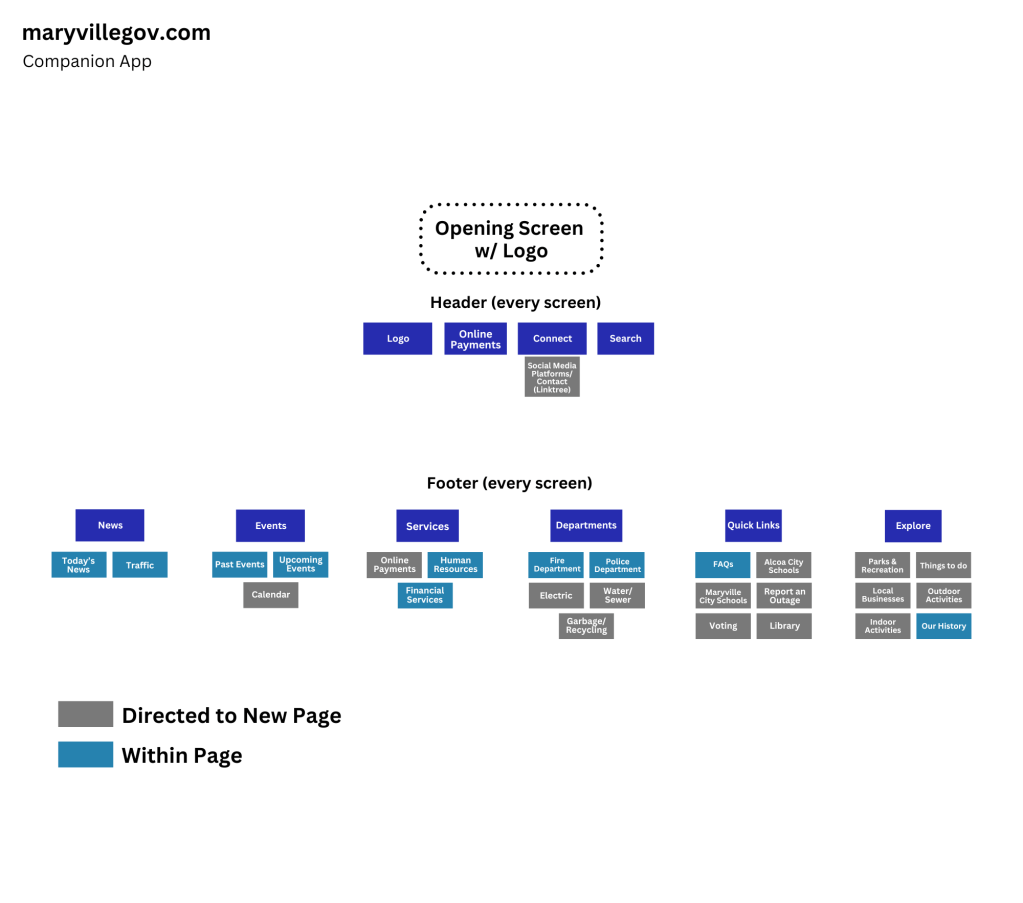
When creating such apps, it’s important to consider what content users truly need on the go and ensure that the app’s structure facilitates smooth navigation. By focusing on information architecture, we can create apps that enhance user experience and meet their needs effectively.
To view a PDF of my website and app site maps, click here.
 Rebecca Branton
Leave a comment