What is Information Architecture?
Information Architecture is the practice of structuring something in a way that’s easy for users to understand. A primary way to illustrate a website or app’s structure is through a site map. Their basic structure and simplification of a website’s functions provide an overview of the organization of a site at a glance. This allows for a better understanding of the site and ways to improve navigation and user experience.
Visualizing Maryville City’s Website
Before creating a site map, the first step to understanding my city’s current website was to go through every page and see where it led. Getting comfortable with the current setup allowed me to understand the creator’s thought process and list out functions related to each other.
I explored the website to the tertiary level, which encompassed the main topics and pages listed in the primary navigation bar. Notably, the Home section acts as the main source of information in this website. 80 percent of the site stems from the Home function, and most of the other navigation functions only link to one service.
After browsing the website, many pages were cumbersome and could be grouped with other sections to consolidate information. Most of the second tier of functions were repetitive, clustered together, and too specific. For example, instead of putting all tax-related information together, each tax form has its own link in the navigation bar.
As a resident of Maryville, I go to the city’s website for upcoming events and recreational resources. Currently, there is not a page or calendar that consolidates events. Resources for activities are also limited and difficult to find.
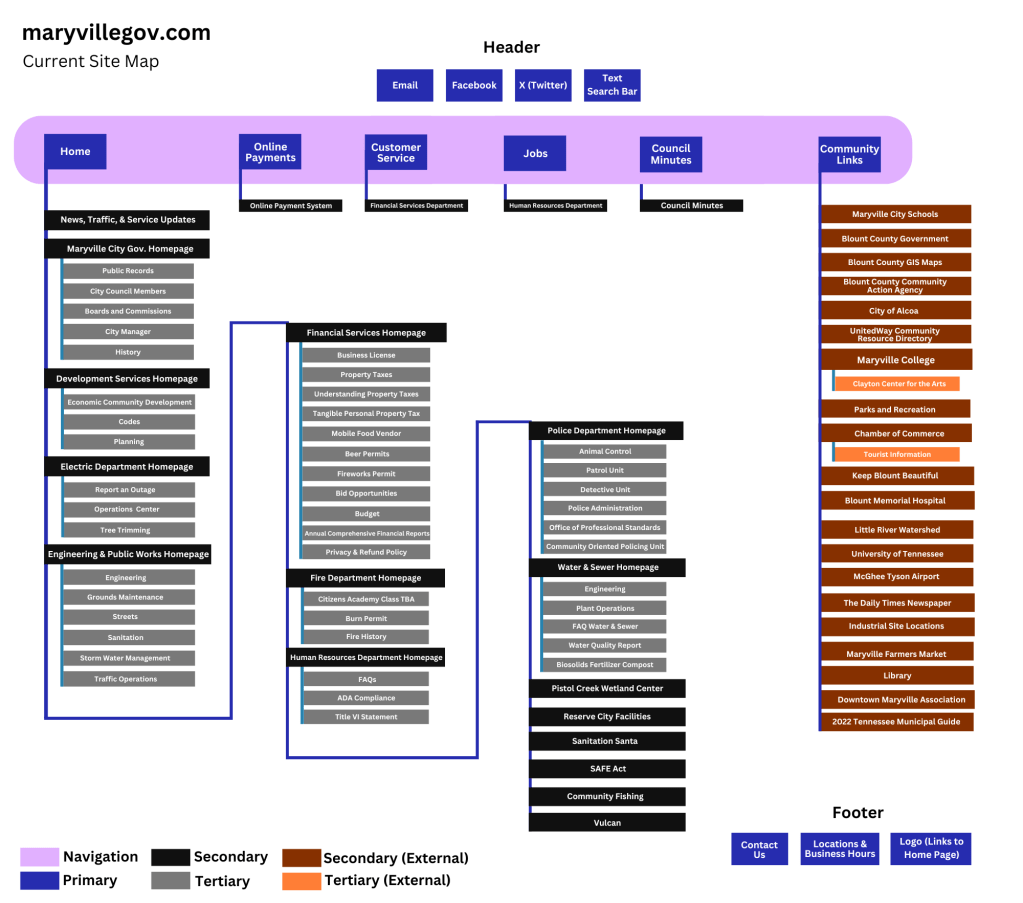
To evenly distribute functions across the navigation bar, moving links from under the Home function is imperative. Grouping related functions together and dispersing them across the navigation bar will be less overwhelming for users and use the given space more effectively. The community links function is where external links are provided, but there is little organization and looks to be an afterthought.
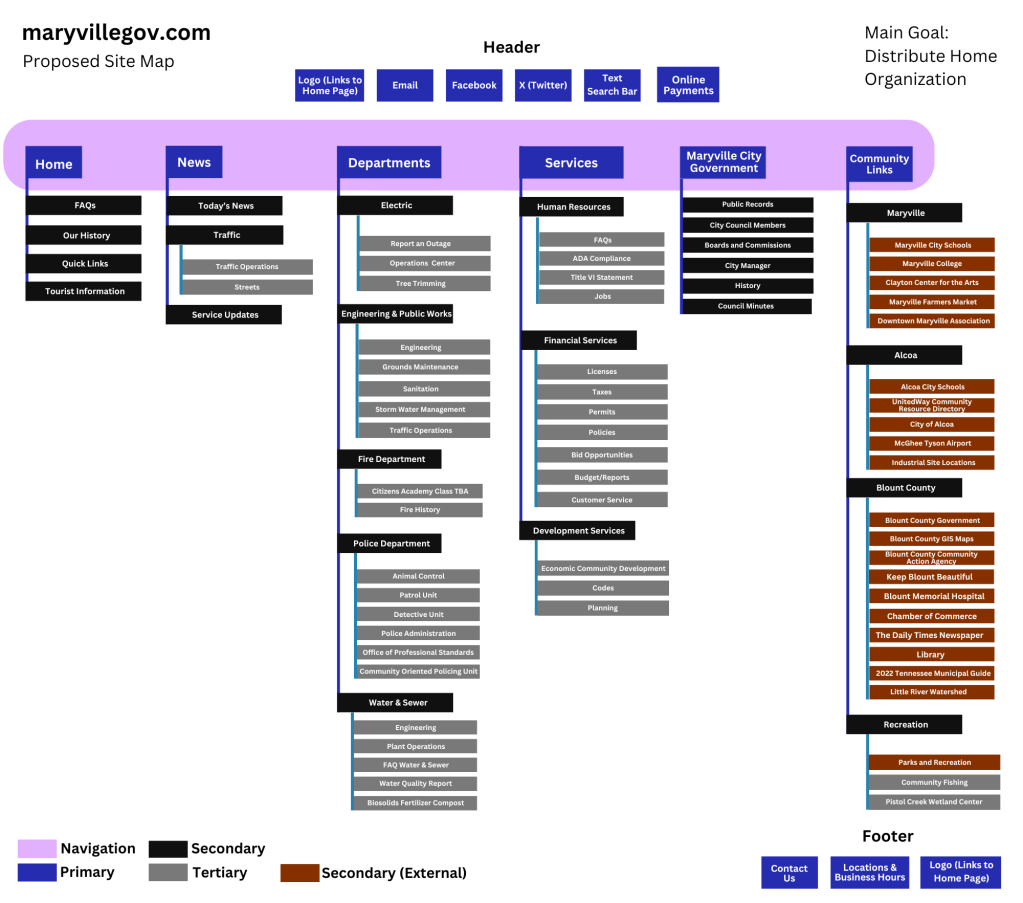
To resolve these issues, I consolidated information by creating new navigation functions, such as “Services” and “Departments”. This allows for more precise searching instead of endlessly clicking links to get where you want. I created a Recreation section to better separate these links, as they were spread throughout the Home page. Instead of the Home page linking to most functions, I simplified it to Quick Links, FAQs, and Maryville’s history, which are not available in the current site.
Final Thoughts
Breaking down Maryville’s website allowed me to better understand the importance of proper website design. Keeping users engaged and confident in their ability to navigate your website is crucial for engagement and successful communication.
A PDF of my site maps can be found here.
 Rebecca Branton
Leave a comment