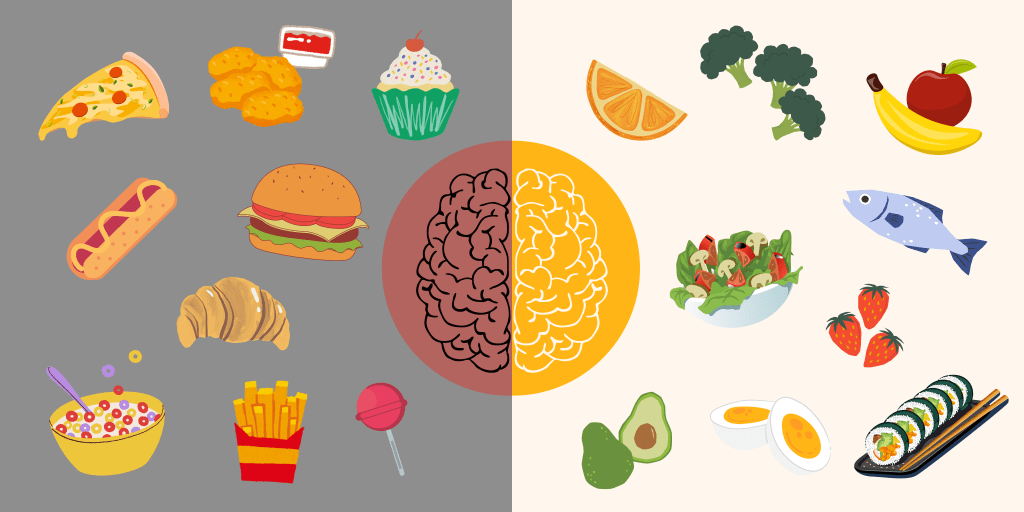
As I continue my journey of learning why I can’t seem to pay attention like I used to, I became aware of the (likely) possibility that a western diet, one that includes high levels of saturated fat and processed carbohydrates, could have a larger impact on my attention span than I previously thought. In chapter twelve of Stolen Focus: Why You Can’t Pay Attention – and How to Think Deeply Again, by Johann Hari, he shares his experience of spending summers in the Swiss Alps with his grandparents and how the foods they ate paled in comparison to his usual frozen pizzas and takeout meals. Despite growing their own vegetables and raising their own stock, Hari found their straight-from-the-source diet to be inedible.
Dale Pinnock, a leading nutritionist in Britain, gave this analogy:
“If you put shampoo into a car engine, you’re not going to scratch your head when the thing conks out.”
Like cars, our bodies need substantial nutrients to run properly. A typical breakfast in the western world is cereal, which is high in sugar and low in everything else. We get a quick burst of energy before suddenly crashing. When this happens, we crave more sugar, and the cycle repeats. Add in caffeine, and you’ll be battling highs and lows all day.
The saying “you are what you eat” is a reminder that the quality of the food you consume truly matters. Dr. Drew Ramsay, a nutritional psychiatrist, states, “The brain gets built from foods. Your brain can only grow and thrive if it gets a broad range of key nutrients.” Instead of upholding a specific diet, like Keto or low fat, focusing on whole foods “as they were originally intended” is the key to receiving proper nutrients. As a guide, shopping on the outskirts of a supermarket is where you’ll find fruits, vegetables, meats, and fish. The middle aisles are full of processed items that hardly count as food.
It’s easy to say changing your diet will get your focus back, but much of the issue is a systemic problem. Stores are full of cheap, processed food that is advertised to us constantly. Individual changes can be made, but addressing the root of the problem is bigger than us.
The chemicals and additives in food today are designed to keep us coming back for more. Terms such as mouth feel, maximum bite force, and sensory specific satiety are used to keep the consumer hooked until the package is empty. Michael Moss, a previous executive at General Mills, Pillsbury, and Nabisco, now writes critiques of the food industry on his blog. These companies want to make products that actively keep you from feeling satiated, because it’s “a serious enemy for a product.” The impact of auditory cues also plays a role in developing a perfect product. A study funded by Unilever found that participants identified certain chips to be fresher due to their louder crunch. Foods that dissolve quickly are also intentionally designed; they trick your brain into thinking that no calories have been ingested, which makes you eat a large amount before the brain sends a signal.
Everything from the shape, sound, and texture of a product is researched and created to have us coming back for more. Switching to whole foods is a huge step forward, but addressing the system is what will provide real change.
 Rebecca Branton
Leave a comment