
This week, I was introduced to the concept of user journey maps. Right away, I was intrigued. Combining problem-solving and graphic design is right up my alley, and journey mapping requires just that. It felt like creating my own treasure map for a quest to the final outcome of a user’s goal. This method helps designers understand the interactions and experiences users have with a product or service. Because design thinking begins with gaining empathy for the user, journey mapping is a wonderful way to capture the user’s perspective and identify their needs, emotions, and pain points.
Components
Journey maps should include certain characteristics to be considered a researched, effective tool. These components include:
Persona: A fictional character representing different user segments. These personas help ground the mapping process in real user behavior and demographics.
Scenario: A narrative that outlines a specific context in which a user interacts with a product or service. It sets the stage for the journey map by describing the situation, user goals, and relevant background information.
Journey phases/timeline: Journey phases refer to distinct stages in the user’s experience, and the timeline gives designers an idea of how long the process typically takes.
Actions/channels/touchpoints:
- Actions: The specific steps users take at each phase of their journey.
- Channels: The platforms or mediums through which users interact with the brand, like social media accounts, websites, and apps.
- Touchpoints: The specific interactions or experiences where users come into contact with the product or service. Touchpoints help identify the positive and negative experiences of the customer.
Thoughts: The mental processes and considerations of users as they navigate their journey. This includes what users are thinking about during specific interactions, such as questions they have, assumptions they make, or information they seek.
Emotions: How users feel at various points in their journey, which can significantly impact their overall experience. By mapping emotions, teams can identify moments of joy, frustration, confusion, or satisfaction. This insight is crucial for designing experiences that resonate with users and minimize negative feelings.
Opportunities for improvements: This refers to specific areas identified during the mapping process where the user experience can be enhanced. By analyzing pain points and unmet needs, teams can develop strategies to address challenges, streamline processes, and create more satisfying user experiences.
Internal ownership: Identifying the stakeholders or teams responsible for various aspects of the user journey. By clarifying ownership, organizations can ensure accountability and foster collaboration among departments to improve the overall user experience.
Key for symbols used: A legend or guide that explains the visual elements used in the journey map. This might include icons, color coding, or line styles that represent different aspects of the user journey, such as positive and negative emotions, touchpoints, or phases. A clear key enhances readability and comprehension.
Thoughtful layout: The strategic organization of the journey map to ensure clarity and ease of understanding. This includes the logical flow of information, appropriate use of space, and the placement of key components. A well-designed layout allows any viewer to quickly grasp the user journey and facilitates effective discussion.
My Experience
Inspired by this concept, I created a journey map for Michelle, a tattoo artist who is new to the area and looking to freshen up her look before her wedding. As I went through the process of researching and mapping out her experiences, I kept asking myself what would happen next if I were the one going through the journey of finding a stylist and getting my hair done. It’s important to step outside of yourself and view the journey from your user’s perspective.
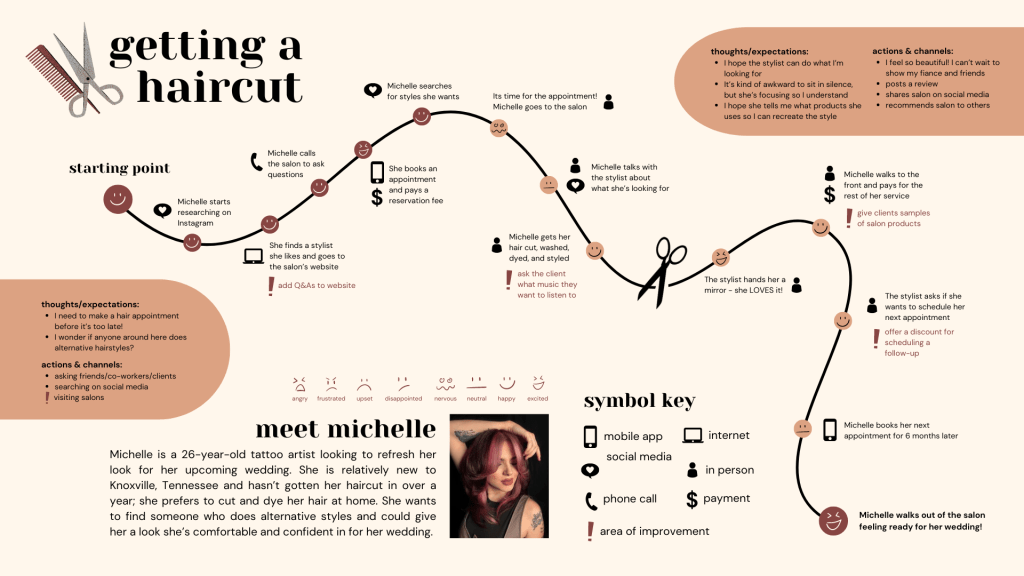
To access my journey map, click here!
 Rebecca Branton
Leave a comment