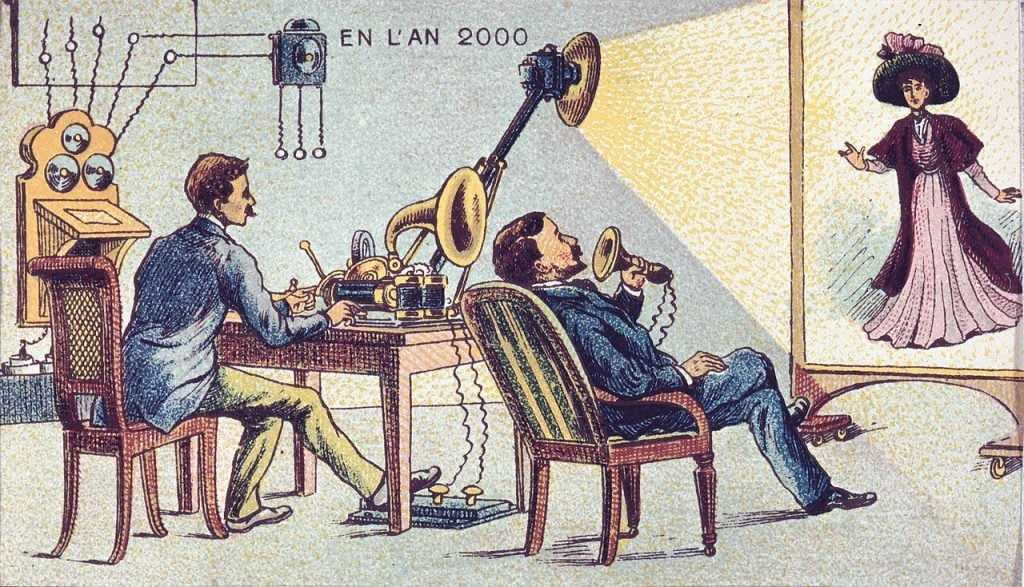
Over the years, I’ve stumbled upon illustrations of what people in the 1900s thought the year 2000 would look like. From flying cabs to mechanical brooms, many ideas of that time reflect current products and services. Seeing how their visions compare to what technologies we have today always interests me, so I decided to look into this project and its origins.
These illustrations come from a series of postcards created from 1899 to 1910 by Jean-Marc Côté. He created visuals for what he thought Paris would look like in 2000. Many components of the work hold true to Victorian trends and gadgets, like a visual calling system that uses phonographs and projectors. Comparing this visual to the video calls and FaceTime functions we have now reminds me just how incredible modern technology is. Victorian ladies would have fainted at the sight of a Roomba.
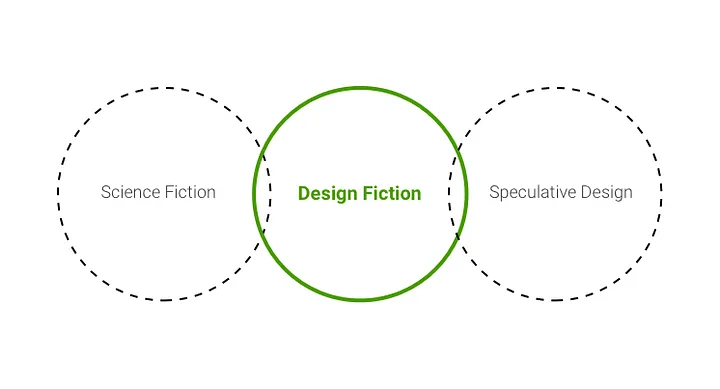
What I didn’t realize was that there is a discipline in design that is specific to imagining products and services of the future. Design fiction is the process of using storytelling and prototyping to explore and critique possible futures. Similar to science fiction writers, designers can depict products, services, or ideas that have the potential to become a reality. Through these hypotheticals, we can see how these products could enhance or become a detriment to our lives.
I was recently introduced to The Thing from the Future, a fun exercise that involves brainstorming and depicting products of the future that fit within certain parameters. There are four categories of cards: arc, terrain, object, and mood. The arc tells you what kind of society the design is created in, the terrain is the subject the design deals with, the object is, well, what kind of object it is, and the mood reflects how we would feel about the design by today’s standards. I participated in three rounds of this with a few other designers, and we shared our ideas afterwards.
One example of the cards we pulled is:
- Arc: Collapse (society as we know it has dismantled)
- Terrain: Memory
- Object: Symbol
- Mood: Outrage
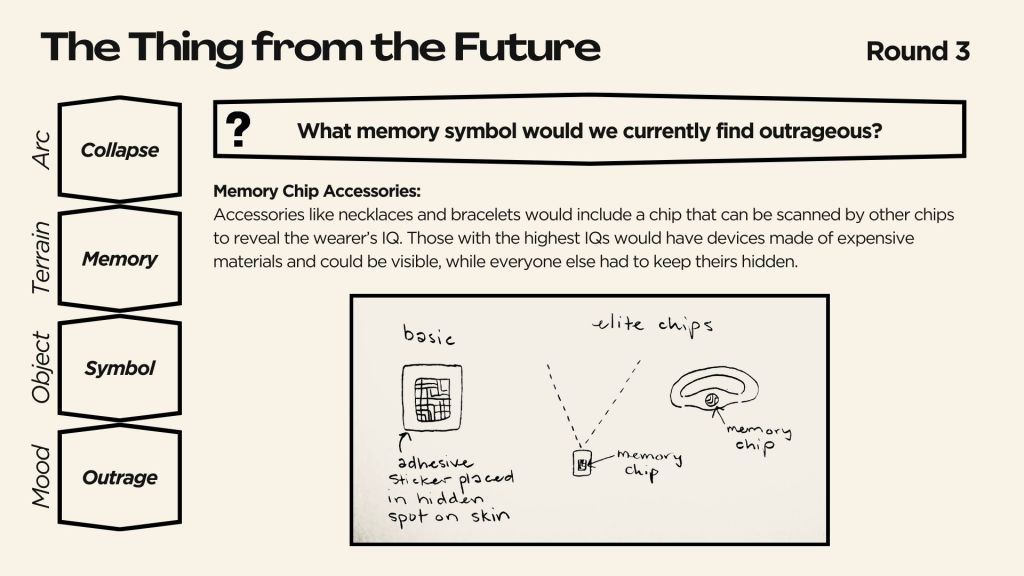
For my design, I depicted memory chips that would result in a dividing class system based on IQ levels. Those with high IQs would wear their memory chips proudly by installing them in luxurious jewelry, while those with low IQs would have to wear them as stickers in hidden spots. This exercise taught me that what-if scenarios are helpful for creating problem-solving designs and examining the possible downsides of an otherwise successful design.
Visual design is a mass form of communication, and with that comes the responsibility of creating designs that promote a better world. Design fiction is a tool that can be used to depict possibilities and inform an audience about the potential consequences of an otherwise perfect concept. To create successful designs, we can look to the future for inspiration.
 Rebecca Branton
Leave a comment