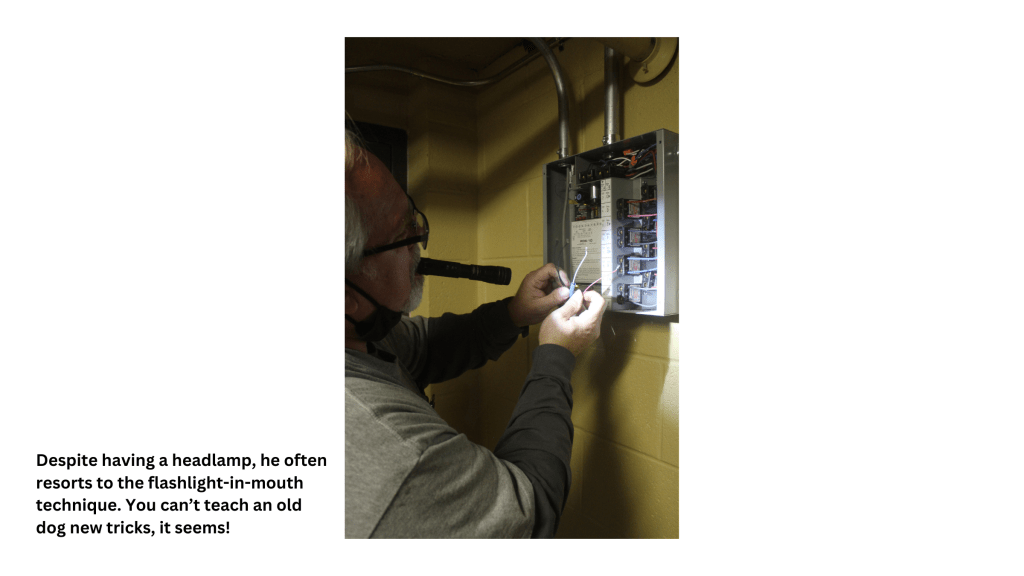
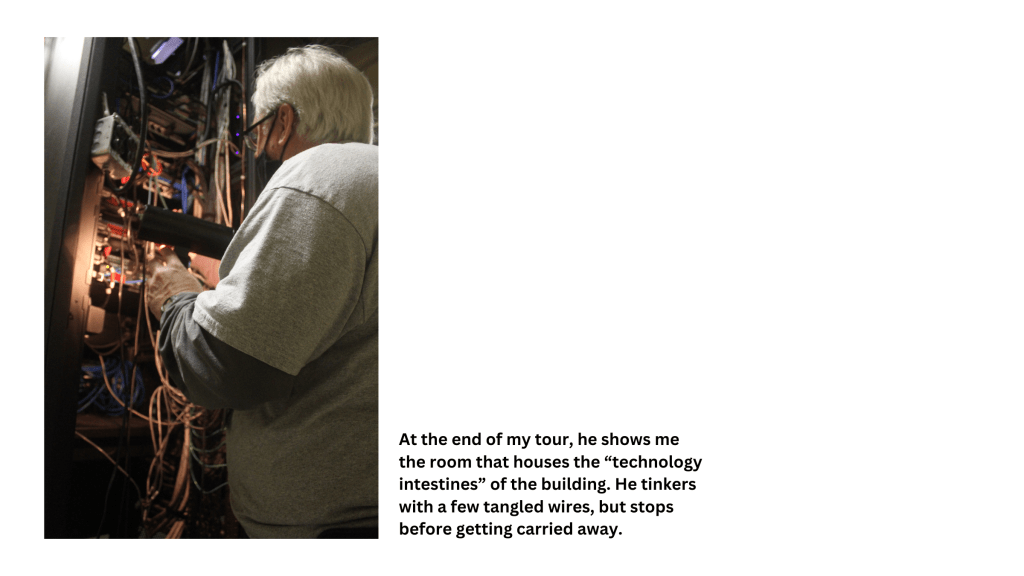
Jim Branton is a simple man. Born and raised in rural Louisiana, he traded his hunting rifles and fishing poles for a white sailor uniform. He joined the Navy when he was 23 and was first stationed in California. There, he met his bride and continued to serve for 24 years, moving his family to 6 different states. Once retired, he put his military skills to use in several factories and warehouses. After a few years, he began a job at Maryville College, a small school in his retirement town of east Tennessee. He is responsible for making sure equipment is up to code and functioning properly. He likes this position because he enjoys fixing things, gets to spend time outside, and has his very own work truck. This past week, I had the pleasure of shadowing him to see what a day at work looks like for him.
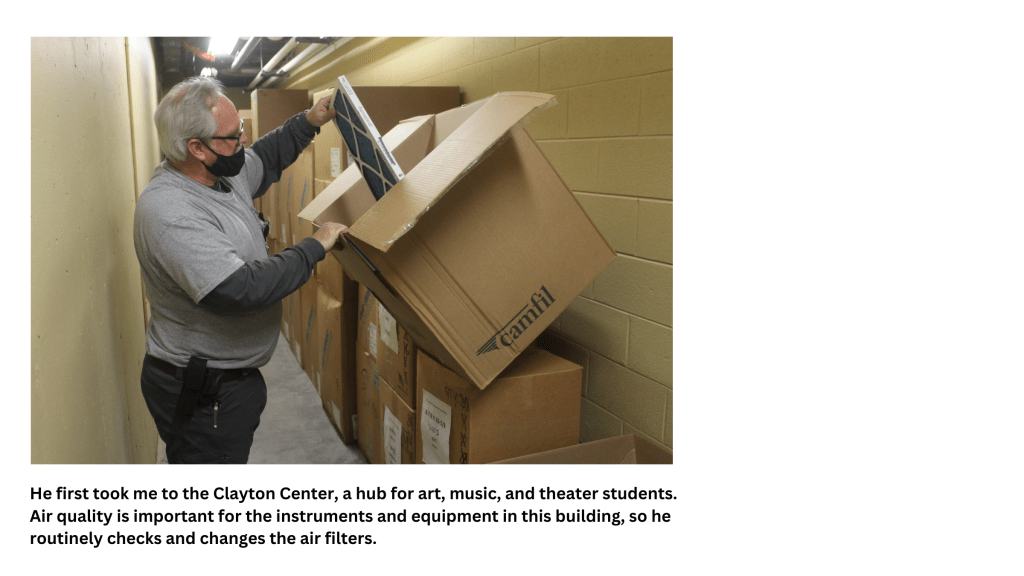
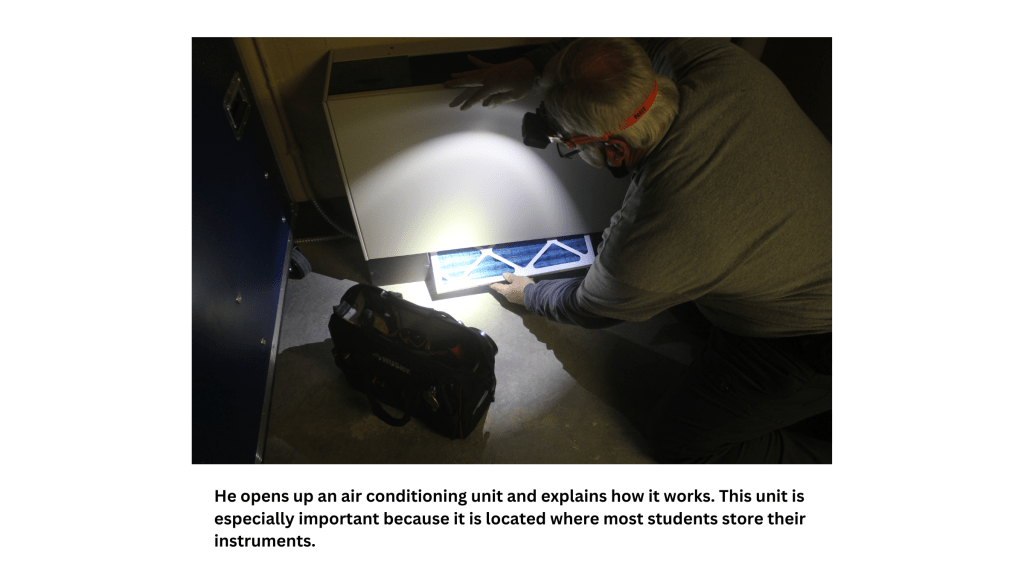
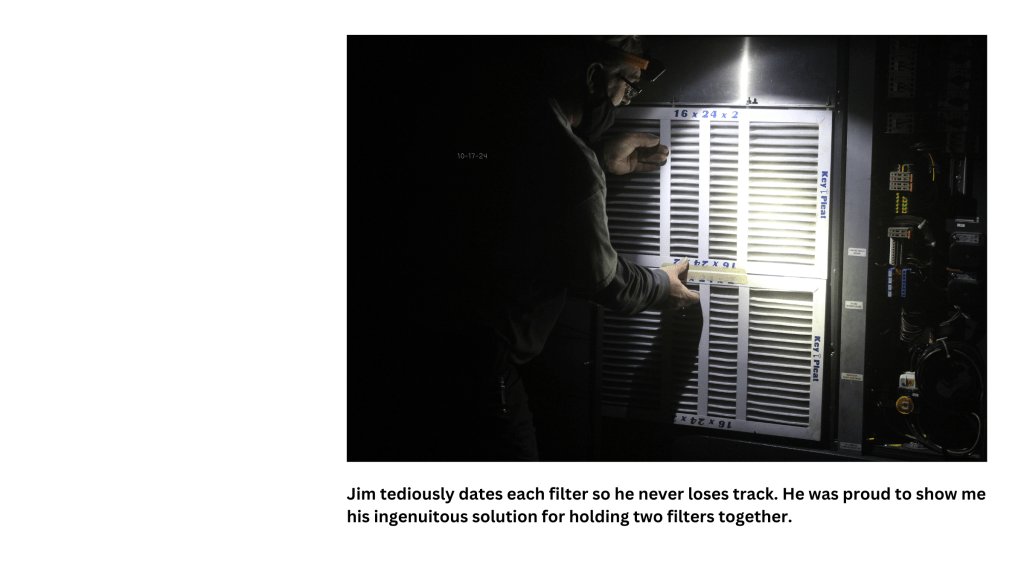
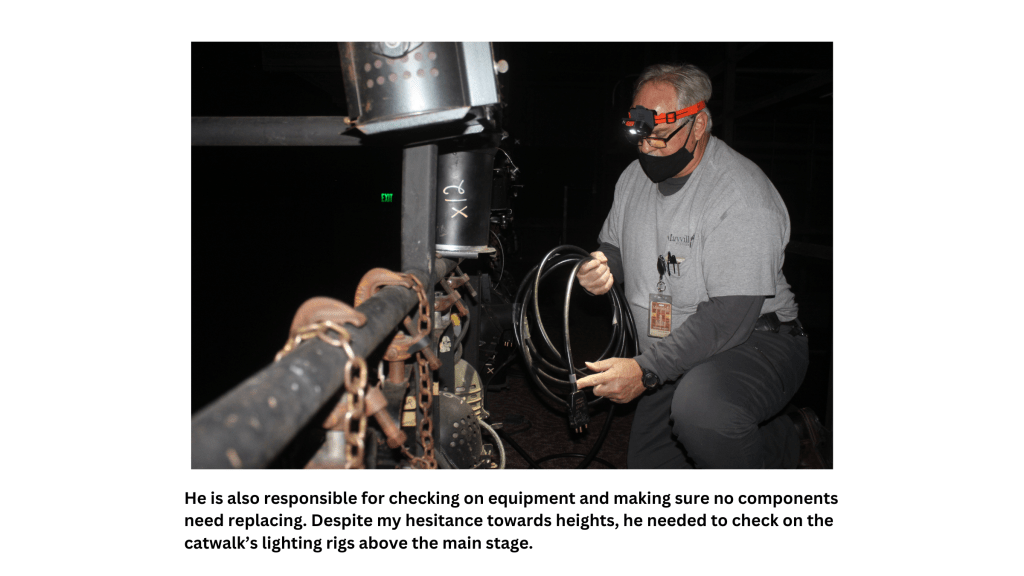
When the work day is done, he likes to return to his childhood hobby of fishing and kayaking. His days may be simple, but he prefers it this way. I think that’s where I get it from.
On top of being a hard worker, he is also an extraordinary dad – my dad. Because of his military service, my brother and I are able to earn masters’ degrees at no cost. I owe my great education to him and am thankful every day for his unwavering support. He told me it’s important to further my education so I don’t have to carry around a tool bag like him, but I would be proud to. These images provide a glimpse into the life of a working class man that prioritizes his family over everything, and I believe that deserves to be recognized.
Creative Process
At the beginning of my creation process for this photo essay, I used the main principles of visual storytelling as my first stepping stone. Authenticity is the first principle I wanted to capitalize on, so I thought of people in my life that have meaningful, relatable stories. This naturally led me to depict a certain archetype in my essay; the heroic dad through the eyes of his thankful daughter. This reminded me of personas, which I kept in mind as I prepared to take pictures of my dad and how I wanted to portray him within his work atmosphere.
My goal for this photo essay is to bring attention to jobs that often go unnoticed, like those of maintenance workers. These are typically hardworking, honorable people who live simply. The message is that people don’t need to be extraordinary in order to be recognized for their accomplishments.
To hone in on my approach, I reviewed Bergstrom’s explanation of storytelling techniques. To support authenticity and to mirror the simplicity of the story, I leaned into the non-dramatic technique to encourage viewers to connect the images to people they may know in their own lives and to reflect on personal experiences. When reviewing what elements create captivating storytelling, I realized I had the chance to include a small element of surprise to change the pace of the story.
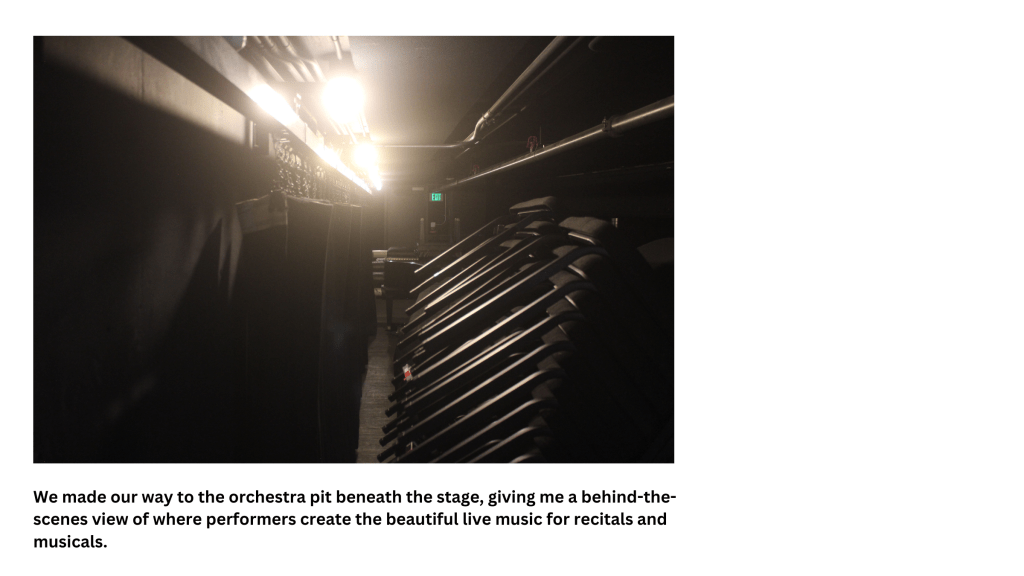
I wasn’t sure what setting I would be taking photos in, so I had to adjust my focus depending on what elements would be in the pictures. As I began to take photos, I focused on linear perspective, relative size relationships, overlap, shading and shadows, parallelism, proximity, and similarity to depict depth and scale within our environment. The rooms we entered were typically dark, so I was able to capture strong contrast in lighting.
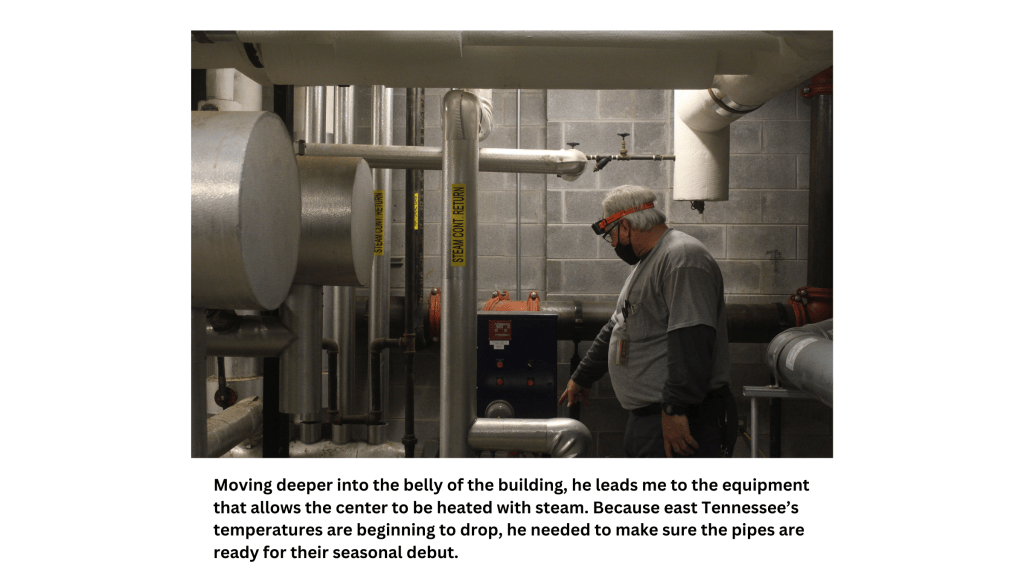
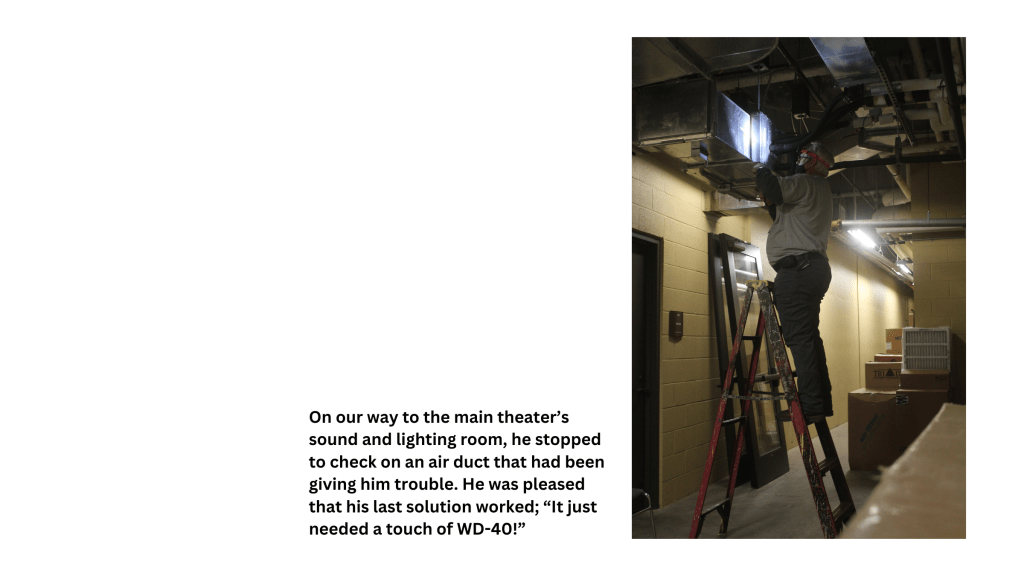
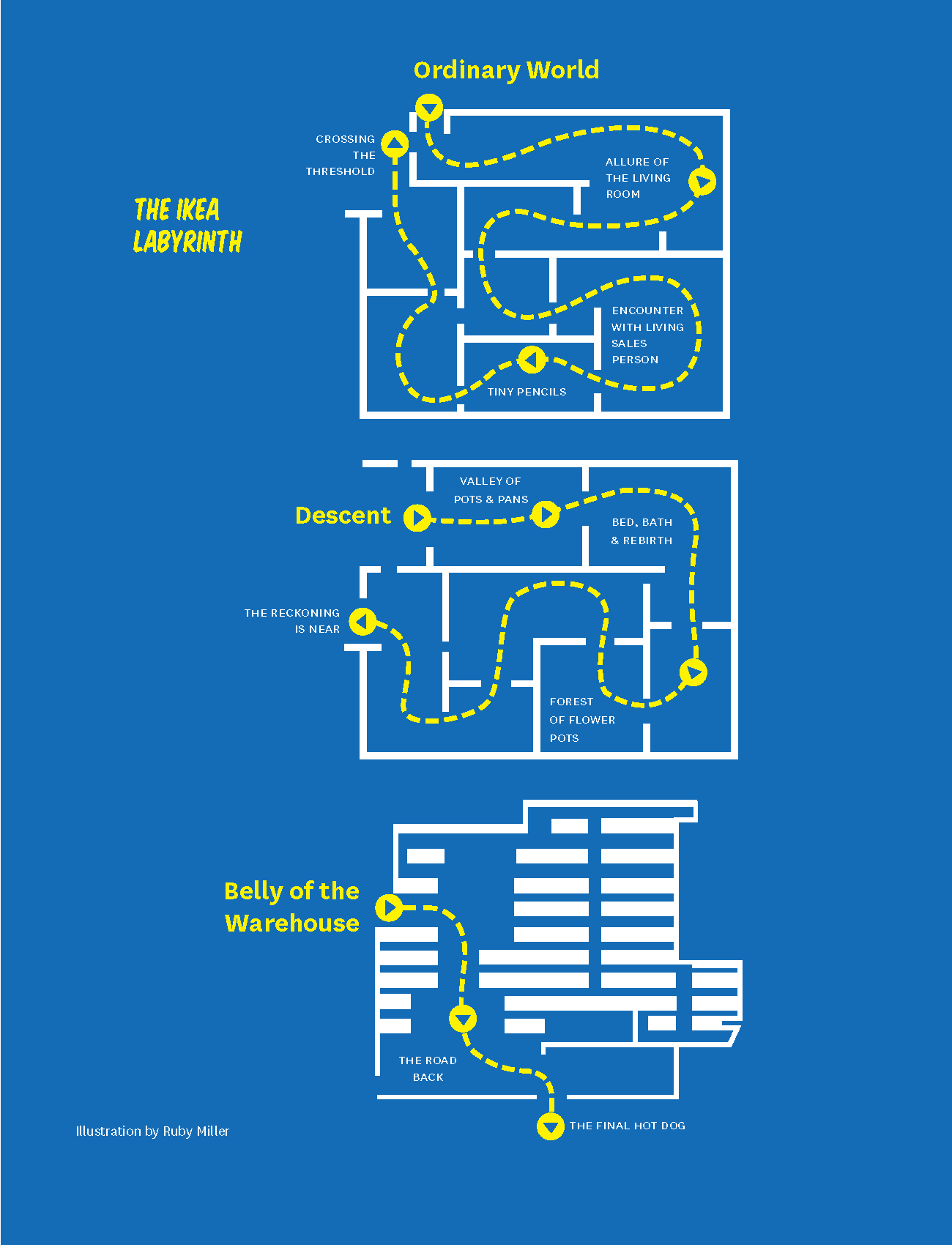
After taking the photos, I selected a handful with Plutchik’s wheel of emotions in mind. I wanted images that encourage joy and anticipation, so most photos show Jim in action to draw the audience in and have them feel intrigued by what he’s doing. As I scrolled through, I realized that the tour he gave me followed the pattern of a hero’s journey similar to Ellen Lupton’s depiction of Ikea. We began in a well-lit hallway that most staff and faculty can access. After grabbing a few air filters, we began trekking into more exclusive parts of the building, like the catwalk above the stage and the steam pipe room. After a journey to the center of Clayton, we slowly made our way out and back to more high-traffic areas.
Finally, I chose nine pictures that could be split into groups of three. This creates a satisfying flow for the viewer and mirrors the beginning, middle, and end of the journey we took together.
Bibliography
Bergström, Bo. Essentials of Visual Communication. London, Laurence King Publishing, 2008. (Module 1)
Busche, Laura. “Simplicity, Symmetry and More: Gestalt Theory and the Design Principles It Gave Birth To.” Canva, 5 Oct. 2015, http://www.canva.com/learn/gestalt-theory/. (Module 4)
“Depth Cues.” ArtNet, Art & Design Foundations, 2024, artnet.nmu.edu/foundations/doku.php?id=depth_cues. Accessed 2 Dec. 2024. (Module 4)
Harley, Aurora. “Personas Make Users Memorable for Product Team Members.” Nielsen Norman Group, 16 Feb. 2015, http://www.nngroup.com/articles/persona/. (Module 3)
Interaction Design Foundation. “Putting Some Emotion into Your Design – Plutchik’s Wheel of Emotions.” The Interaction Design Foundation, UX Courses, 5 Jan. 2020, http://www.interaction-design.org/literature/article/putting-some-emotion-into-your-design-plutchik-s-wheel-of-emotions. (Module 3)
Lupton, Ellen. Design Is Storytelling. New York, Ny, Cooper Hewitt, Smithsonian Design Museum, 2017. (Module 2)
Montalto, Mike. “Worth 1,000 Words: The Four Principles of Visual Storytelling.” Amplifi, 12 May 2022, amplifinp.com/blog/4-principles-visual-storytelling/. (Module 1)
 Rebecca Branton
Leave a comment