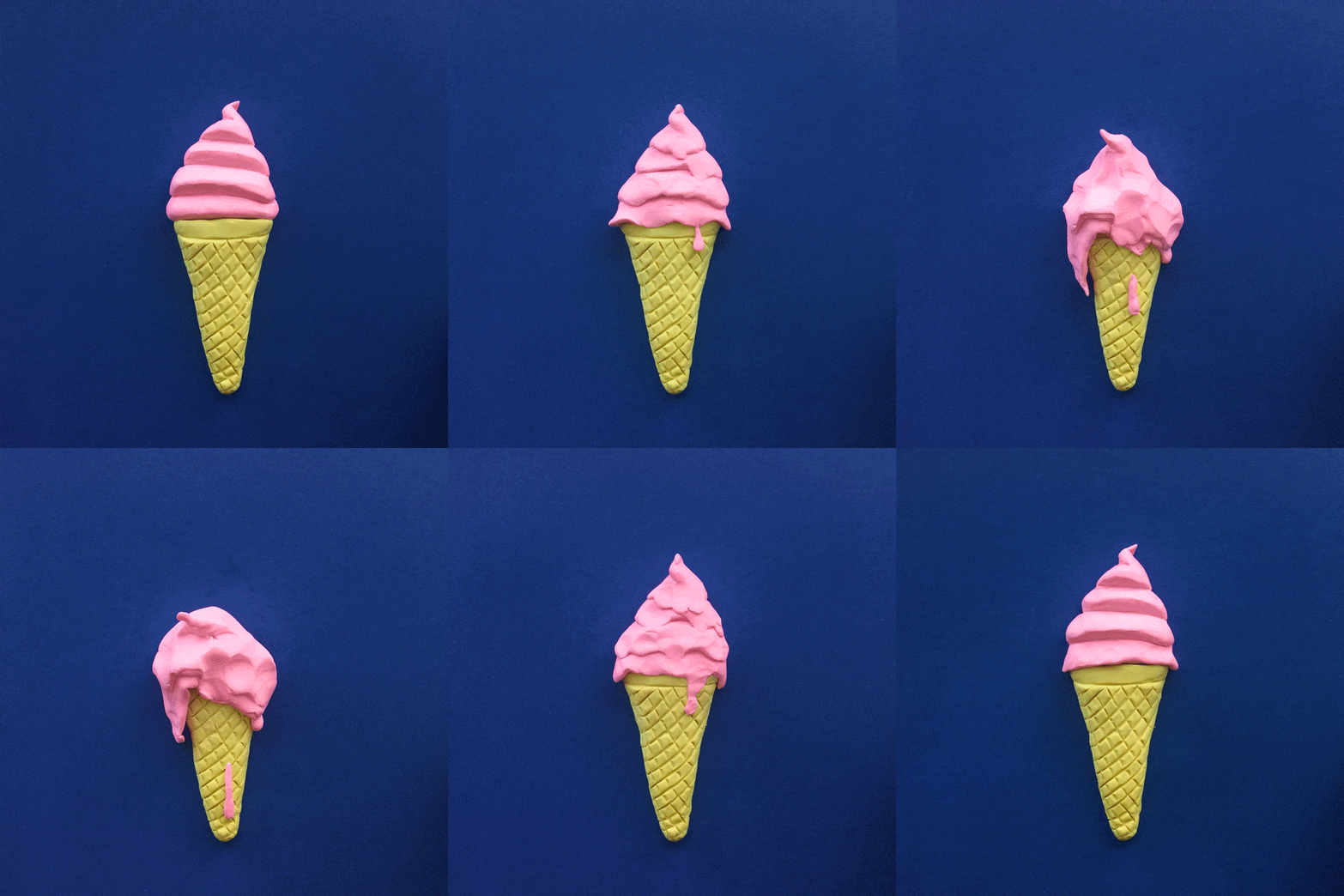
This week, I continued learning about stop motion animation by following through with one of last week’s proposed ideas. I amped up the production value just a bit and used a Canon camera to capture each shot instead of my iPhone. My medium of choice remained as Play-Doh; not a lot of graduate students get to say they use it to get their degree! Read through to the end to see which storyline I decided to create!
Before I jumped into the stop motion creation process, I read a few more chapters of Animated Storytelling by Liz Blazer. Below are the key take-aways:
Chapter 7 / Sound Ideas
Many amateur filmmakers overlook how their project will sound when developing their story. However, good music and sound effects can transform a decent animation into something extraordinary. Sound design in animation is not just about picking your favorite song for the background; it’s about how sounds can enhance the viewer’s experience and understanding.
There are two main types of sounds in media: diegetic and non-diegetic. Diegetic sounds are those that originate from within the world of the story, like a dog barking or a car horn honking. Non-diegetic sounds, on the other hand, aren’t part of the world or created by anything visible on screen. These typically include music, sound effects, and voiceovers. Montages, for example, often rely on non-diegetic sound, such as narration and music, to enrich the storytelling.
Chapter 8 / Design Wonderland
One advantage animation has over traditional filmmaking is its ability to explore the fantastical. Animation offers more creative freedom when designing worlds and characters, allowing for the bending of rules and departure from conventional narrative structures. This doesn’t mean you should abandon consistency in your designs, but rather, focus on selecting unique themes and executing them consistently.
A few questions can be asked to help determine the “rules and logic of your new world” (Blazer, p. 149).
- What is the time and place of your world?
- What are the physical rules of this world?
- What are the societal rules?
- What is day-to-day life like in your new world?
- What do their family structures look like?
- What technologies are used?
- What interesting conflicts can arise from the rules and environment you’ve built?
Research to Inform
This animation heavily inspired the subject matter of my animation, but the sound used truly elevates the simplicity of the visuals. The audio pairs with the actions of the Kiwi perfectly to enhance the emotion of the story.
The subtle sound used in this animation bridges the gap of the art style with real-life sound to enhance the characters’ actions and let their personalities shine.
When looking at typography motion design, lyric videos offer a creative take on how to tell a story with text. This lyric video seamlessly melts the words into visuals to further convey the story and keep the viewer waiting for more.
This animator’s take on text is unique to her animation style and does a great job matching her other visuals. Although text in a digital setting is usually “perfect”, her handwritten style enhances the fictional storyline.
My Turn!
For my proper attempt at stop motion animation, I chose to create my non-linear storyline of a snake falling into a wine bottle and coming out green with drunkenness. I decided to make the snake more wormlike, but the concept remains the same. Overall, I really enjoyed the process. Seeing the little worm come to life after spending hours adjusting him ever-so-slightly is very rewarding. I did have some hiccups when it came to putting the video together, so the animation is a bit jumpy at parts. Despite this, I think the storyline is able to be followed and properly conveys my idea.
 Rebecca Branton
Leave a comment