by Rebecca Branton
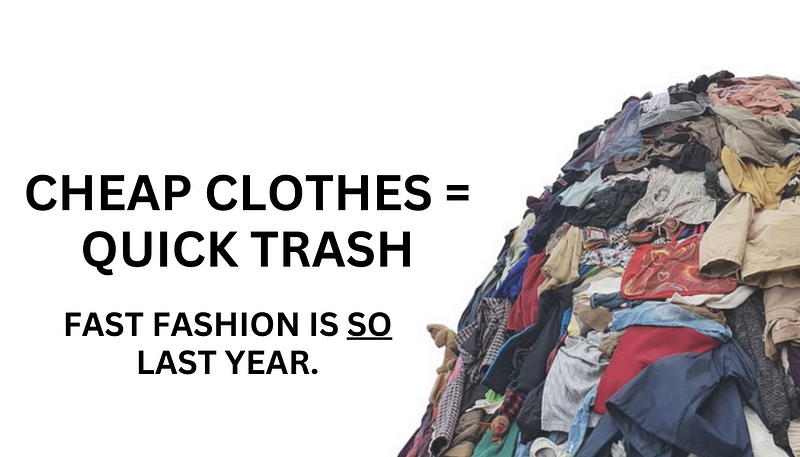
Welcome to your intervention. It’s time to empty your cart and think twice about buying that dress you saw for 0.2 seconds while doom-scrolling. Nobody is perfect, and I’m still working on this myself. Together, we can break free from the shackles of micro trends and fast fashion (even if they’re super cute).
With the ever-increasing use of social media, micro trends are a byproduct of people sharing their fashion opinions. From there, a snowball effect begins; five people following suit quickly turn into thousands, resulting in a frenzied audience buying anything that fits within the parameters of the trend. Next thing we know, a new discovery will be made, leaving yesterday’s treasure to rot in the back of your closet.
In a world plagued with trend cycle whiplash, the antidote is easier than it may seem. Instead of falling victim to overconsumption in attempts to keep up, our efforts should turn to refining our personal styles and remaining true to our unique preferences.
To put it plainly, overconsumption is killing our planet. Cheap clothing ends up in the landfill due to poor quality and the inability to stand the test of time. Products are no longer made to last, but to make a quick buck. Buying quality pieces that reflect your overall sense of style will save the planet, your money, and your sanity in the long run.
What are micro trends?
Let’s kick things off with a mini lesson to make sure we’re on the same page. What are micro trends, and how do they differ from trends? Compare clothing now to what was popular in the past; trends can often represent decades, but micro trends can rise and fall within a few months. Basically, a micro trend is a standard trend on steroids, feeding off social media and online shopping to have its 15 minutes of fame. Once that time is up, what happens? Maggie Zhou from Good on You explains that behind a thin veil, “faster production, exploitative manufacturing processes, and plastic clothing are needed to keep up with the demand that micro trends create.” We live in a quantity-over-quality society, but it’s time to break the cycle.
Effects of trends on your wellbeing
Social:
- It’s a tale as old as time; if you don’t have what’s “in,” you’re out. Trends are a guaranteed way to participate in a (not so) silent status competition. Those who have it all seem to get it all, and anyone left without, by choice or not, is coined as an outcast. This may sound elementary, but it happens at every age. Being able to participate in every new trend is a subconscious way of boosting status and showing the world that you have expendable income, even if that’s not the case.
Financial:
- The turnover rate of what you wear is off the charts and wastes your money. Since products need to be made so quickly to meet demand, quality is at the very bottom of any company’s priorities. You may buy an item you love, but you can only wear it a few times before threads begin ripping and the item becomes unwearable. By the time you replace this item, you’ve spent as much on cheap clothing as you would on a durable, quality piece that is made to last.
Psychological:
- We all know the thrill that comes after pressing the ‘place order’ button, but how long does that last? It’s a dopamine boost, but is it worth it? As humans, we crave that rush and seek it out in any way we can. It might feel good in the moment, but soon your purchases pile up on that one random chair in your room and take more effort to care for than its worth. Remember, the more you own, the more it owns you.
Effects of trends on our planet
Shipping emissions:
- Most micro trend shopping is done online and often comes from other countries. Although it’s convenient for the consumer, there’s background work that goes unseen. Ships, planes, and trucks all produce emissions that pollute the planet and contribute to our climate crisis. It’s easy to think that a purchase here and there doesn’t make a difference, but the millions of packages being delivered every day add up.
Increased clothing waste:
- Trendy clothing is not made to last and ends up in the garbage much quicker than quality products. Tom Crisp, head of the sustainable fashion course at the University of Falmouth, warns that “these clothes are overproduced and generally made from fossil fuel-derived plastics, further adding to the environmental and climate emergency through oil extraction, chemical pollution and causing micro-plastics to leach into soils and seas degrading the ecosystem.” …Yikes. So even after receiving and wearing an item of clothing, it still has dangerous effects on the planet when tossed and out of sight.
Mass production:
- Quantities of trending items skyrocket and then go to waste when the trend dies. Warehouses must make room for the next big thing, and leftover inventory is often thrown away despite being brand new. Companies would rather have too much and meet the demand than too little, so any excess is likely tossed instead of being donated or distributed.
Effects of trends on your closet
Your wardrobe becomes dated:
- Trendy pieces stick out like a sore thumb compared to basic pieces. Once they go out of style, you won’t feel as comfortable wearing them. Since it was so obviously trendy at one point, wearing it after the craze dies down makes it glaringly obvious that it’s out of style. If you’re not in love with the piece, you’ll stop wearing it. When your wardrobe is built on a solid foundation of basic pieces, your style immediately becomes timeless.
- Pieces sit in your closet only to be worn a few times. If you wear trendy pieces often, people will notice. If you wait too long to wear them, the trend is already six feet under. It’s truly a lose-lose situation.
If you’re on time, you’re late:
- By the time your package is delivered and you can finally wear what you ordered, the trend has already faded into the past. Remember that green House of Sunny dress that everyone and their mother ordered, only for it to take ages to deliver and by the time everyone had it, the rose-colored glasses were ripped off? As micro trends continue coming and going at lightning speed, this is the inevitable fate for any item you buy.

So, have I convinced you to empty your shopping cart yet? I know trends are tempting and fun every once in a while, but micro trends are popping up left and right trying to grab your attention. The more you play into it, the more targeted ads are thrown at you. I value my style and like to have fun with what I’m wearing, but trying to keep up with every new trend has honestly been such a pain. I finally threw in the towel and have started to learn how to break my nasty habit of overconsumption. By replacing your current tendencies, you can curate an original style that will save you money, refresh your wardrobe, and reestablish your love of clothing in a healthy way!
How to break the cycle
Define your style:
- Take note of what you reach for most when getting dressed and build outfits around those staple pieces. Find a FEW broad trends you align with, but don’t go crazy when adding to your closet. Focus on accessories that make you feel good and reflect your style. Treat your wardrobe like a curated collection! InStyle fashion editor Samantha Sutton recommends “playing dress up” in your own closet. Don’t be afraid to experiment with items you already have; something amazing could come of it!
Change how you get a dopamine boost: Thrift and DIY!
- Find joy by hunting for hidden gems at thrift stores or creating items tailored to you. Putting work into creating or finding pieces you love will give them value and purpose in your wardrobe. Secondhand or customized clothing is sustainable and gives you a one-of-a-kind look!
Don’t impulse buy:
- If you are absolutely in love with an item, put it in your cart but don’t buy it right away. Envision yourself with this item and be realistic about how often you would use/wear it. Can you see yourself wearing it at least three different ways? Will you wear it again this time next year? Is it made of a quality fabric that washes and dries well? Is it comfortable/easy to wear?
Don’t you feel so liberated right now?! I know I do. Old habits die hard, but the normalcy of overconsumption has to end. So much is at stake and we didn’t even know it, but now that we do, we can change for the better. So there you have it, all the reasons why that TikTok shop tank top (or five) isn’t worth it. Go on, empty your cart, bestie. As you can see, it’s for the best.
Sources
Zhou, M. (2022, July 29). What are micro trends? how styles change faster than ever before. Good On You. https://goodonyou.eco/micro-trends/
Copestake, I. (2022, November 11). How microtrends are hurting the environment. How Microtrends Are Hurting the Environment. https://www.vice.com/en/article/k7bg5a/fashion-microtrends-bad-for-environment
Sutton, S. (2023, December 11). How to find your personal style, according to experts. InStyle. https://www.instyle.com/fashion/clothing/how-to-find-your-own-personal-style
 Rebecca Branton
Leave a comment