
WHAT IS DESIGN THINKING?
If you’re anything like me, you would define design thinking as the process designers go through to solve a problem. Sounds pretty straightforward, right? The truth is, design thinking is for everyone. Whether or not you classify yourself as a designer, you might be a key asset to finding a solution to a certain problem simply by being who you are and bringing your experiences with you.
To give it a definition, design thinking is “a proven and repeatable problem-solving protocol that any business or profession can employ to achieve extraordinary results” (Fast Company Staff). To put it simply, it’s a thought process that can be translated to practically anything. Design thinking is human-centered, meaning no problem can truly be solved without taking human experience into account. Design thinking does not have to be a complex, ultra-professional process. By approaching it broadly and taking any idea (no matter how big or small) into account, many solutions can be brought to the table. The process takes anywhere from three to seven steps, depending on who you hear it from (Dam). To meet in the middle, a five-step design process is illustrated and described below.
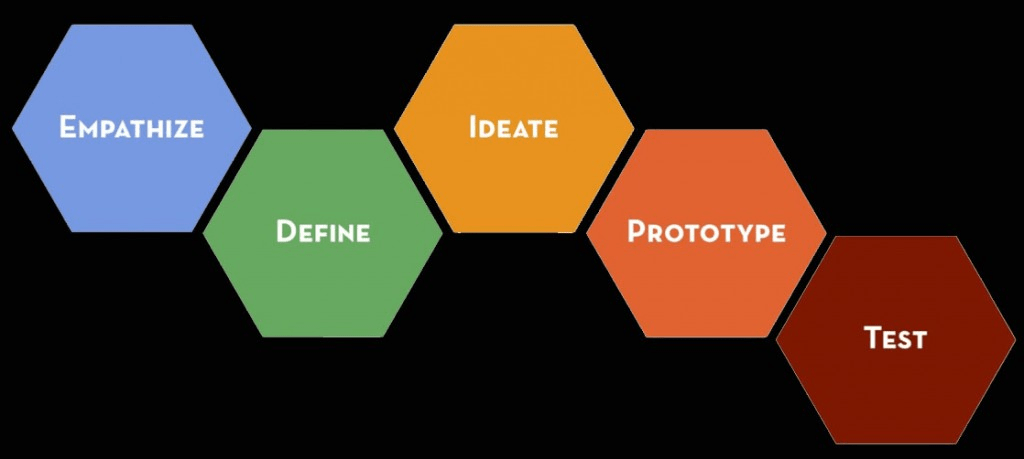
EMPATHIZE – The first step of the design process is to observe what problems your users face and immerse yourself into their lifestyle to better understand their needs and experiences. Start by putting yourself in your user’s shoes.
DEFINE – Next, organize your observations and define what problem(s) your users are facing. Be sure to remain human-centered when defining issues.
IDEATE – Begin generating ideas by looking at the problem from different perspectives.
PROTOTYPE – Create inexpensive, small-scaled models of the ideas that best solve the problem.
TEST – After realizing any limitations or weaknesses in the prototype stage, create a refined product to present to your users for extensive testing.(Dam)
Because this process is not linear, returning to previous steps after testing is likely. Each problem requires unique solutions, which means the design process will never be exactly the same. Use these steps to help you identify what is needed next in your process!

WHY IS IT IMPORTANT?
Design thinking is important because its foundation is rooted in human observation. The process can be implemented anywhere and applied to anything. In Madurai, India, problems involving “needless blindness” were a growing concern for Dr. Venkataswamy, a practicing ophthalmologist for 58 years (Aravind). After retiring, he set out to find a solution to this issue and turned to, surprisingly, McDonald’s for inspiration. He thought that if this company could train employees from around the world and of different backgrounds to prepare and serve a product in the exact same way, he could attempt to apply this model to eye care. (Aravind)
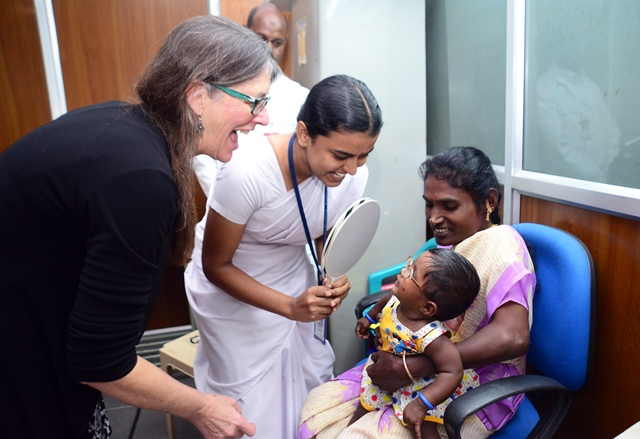
Instead of focusing on the eye care systems established in other parts of the world, Dr. Venkataswamy and his team first studied the human behavior and culture in the area (TEDTalk). This became the beginning of Aravind Eye Care, a system that provides hands-on training and local manufacturing to achieve affordable eye care.
When Aravind was established in 1961, the government wanted the program to reach villages in India. Through Dr. Venkataswamy’s involvement with the World Health Organization, mobile routine eye exams became available to those living in remote areas. 1500 check-up camps are available each year, equaling about 35 testing camps per week (Aravind).
To provide job opportunities in the community, young women are brought in from villages to receive training and ultimately act as paramedical staff for Aravind hospitals and clinics. This allows doctors to perform more procedures, with the average being about 2,000 surgeries per surgeon; the national average is 220 (Aravind).
To reduce the cost of purchasing ocular lenses used to replace patients’ cataracts from the United States, production in India first started in the basement of an Aravind hospital. Local lens production became a quick reality for Aravind due to their innovation and creation of early prototypes. Instead of waiting for conditions to be perfect, they utilized the resources available to them and began production at a small scale (Aravind).
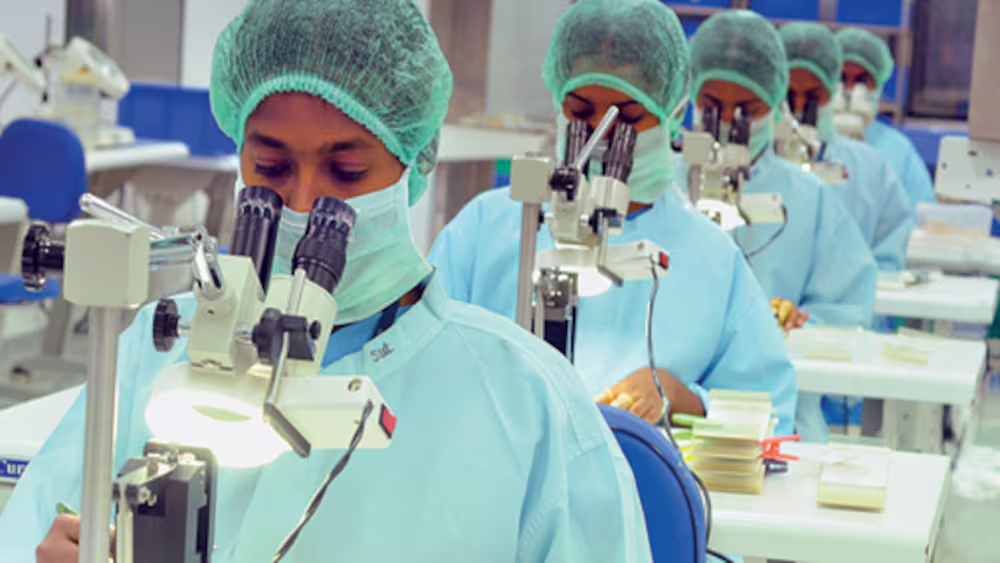
This human-centered way of thinking allowed a complete eye care system to be established in India. By leaning into design thinking, Dr. Venkataswamy revolutionized how patients receive care. By applying the design process to different industries and professions, the world can be a more empathetic, human-centered place.
SOURCES
Aravind Eye Care System. “Infinite Vision.” Www.youtube.com, 25 Sept. 2018, http://www.youtube.com/watch?v=_mXVmGr2TCw.
“Our Story.” Aravind Eye Care System, 2023, aravind.org/our-story/.
Dam, Rikke Friis. “5 Stages in the Design Thinking Process.” The Interaction Design Foundation, 1 Mar. 2024, http://www.interaction-design.org/literature/article/5-stages-in-the-design-thinking-process.
Fast Company Staff. “Design Thinking… What Is That?” Fast Company, Fast Company, 20 Mar. 2006, http://www.fastcompany.com/919258/design-thinking-what.
TEDTalk. “Tim Brown Urges Designers to Think Big.” YouTube, 30 Sept. 2009, http://www.youtube.com/watch?v=UAinLaT42xY.
 Rebecca Branton
Leave a comment