Created in 2007, Babbel is a language learning app that offers bite-size lessons in fourteen languages that can be completed anywhere, anytime. For a company that offers exclusively digital services, having a strong social media presence is crucial to the success of the brand. To evaluate their level of success, we can begin by looking into what type of content Babbel posts and how their audience tends to interact.
Before we jump in, there are two umbrella categories for organizing content that are important to understand – engagement-based or conversion-focused content:
- Engagement is all about interaction; comments, likes, shares, and overall participation are used to measure engagement. The goal is to create content that sparks conversations, resonates with your audience, or captures attention in a way that encourages people to interact.
- Conversions are all about persuading people to take an action, whether that’s making a purchase, signing up for something, or downloading an app. The focus here is more on clear calls to action (CTAs) and trust-building.
To evaluate Babbel’s organic performance, analytics tools such as HootSuite, Sprout Social, and BuzzSumo can be used to access key metrics that give insight to the success of Babbel’s posts and what type of content gains the most interest from their audience. For this analysis, BuzzSumo’s Facebook Page Analyzer will be the primary tool used.
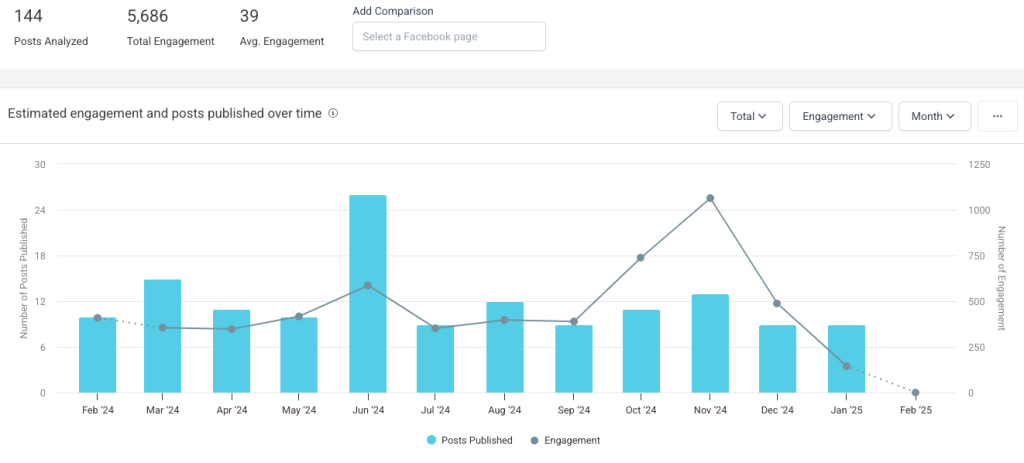
Since February of last year, Babbel has made 144 posts on Facebook. Overall engagement includes likes, shares, reactions, and comments. For the year, Babbel received an average of 39 engagement hits per post.
Let’s focus on the metrics for June and November. Babbel posted 26 times in June and received 586 total engagement, averaging to 22.5 per post. In November, they posted 13 times with total engagement at 1,064 – an average of about 82 per post.
Here’s a look at their most successful posts for those months:
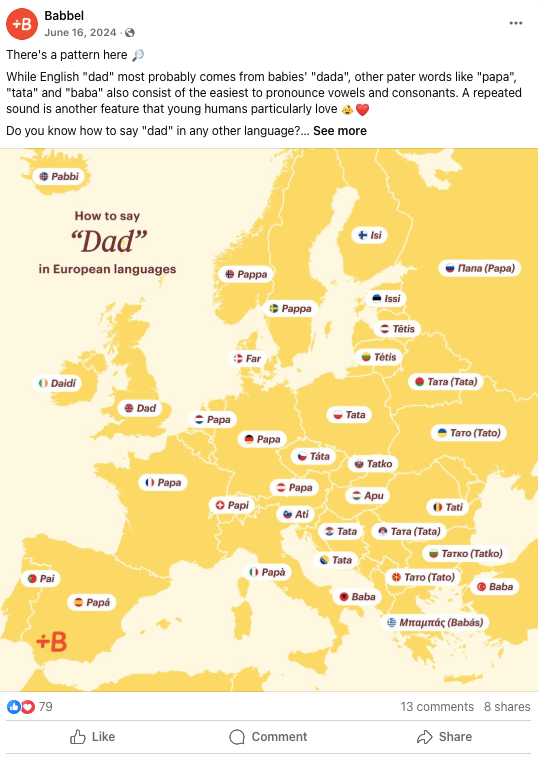
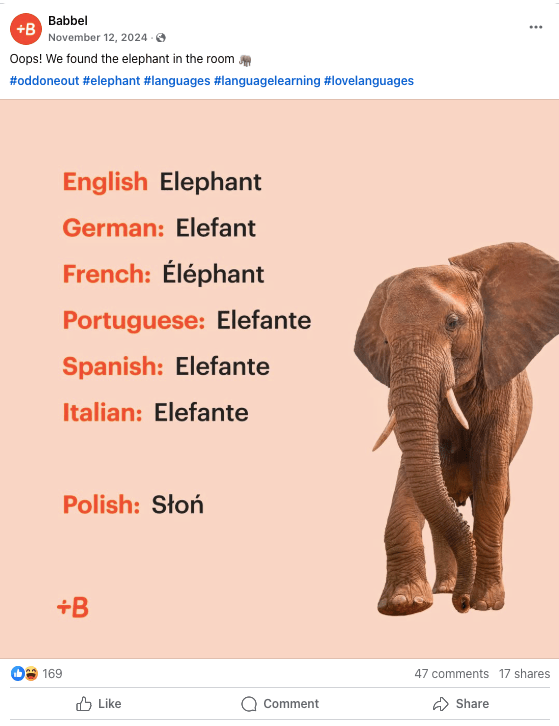
When comparing the two, Babbel’s June post is more informative and aligns with the United States’ celebration of Father’s Day. Most of the thirteen comments are sharing how to say “Dad” in other languages. Similarly, November’s post is about how to say one particular word, elephant, in different languages and has comments from other language speakers sharing the word. Both posts are engagement driven, but take slightly different approaches for delivery.
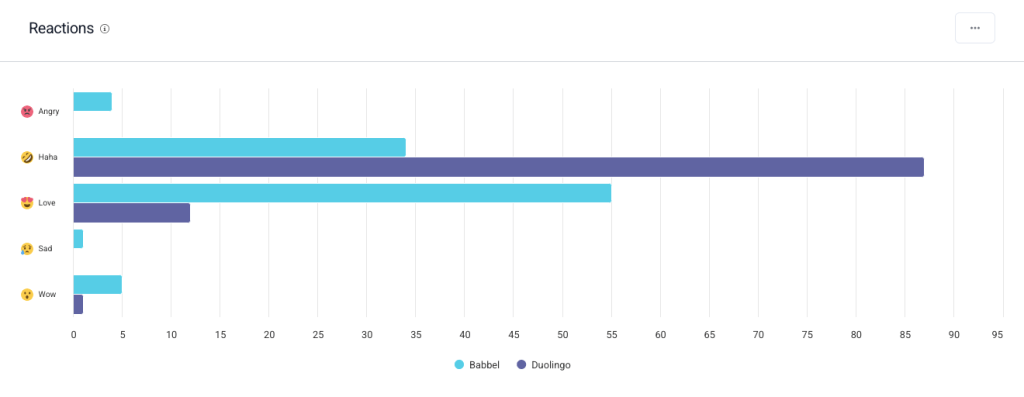
So, what sets these two posts apart, and why was the elephant in the room much more successful? The first difference is the number of languages included in each post. For June, there are over thirty countries represented in the post. In November, only 7 languages are represented, which may have encouraged viewers to comment any not included. November’s caption is also more playful than June’s, which increased the amount of laughter reactions.
Competitive Analysis: Duolingo
Duolingo is a competitive language learning app that was founded in 2012. They take a vastly different approach to social media but are successful in their tactics. Let’s see how the two platforms compare:

Despite posting ten times less, Duolingo received ten times more in total engagement for 2024. In December alone, Duolingo posted 6 times and received 47,885 in total engagement, averaging to 7,980 engagement hits per post.
Their most successful post from that month was a music video featuring their mascot, Duo the Owl, with background dancers dressed like characters from the Netflix series Squid Game. By this post alone, it is clear the Babbel and Duolingo handle their social media accounts very differently. Duolingo takes a comedic approach to their advertising by participating in major trends and using their mascots to help personify the brand.
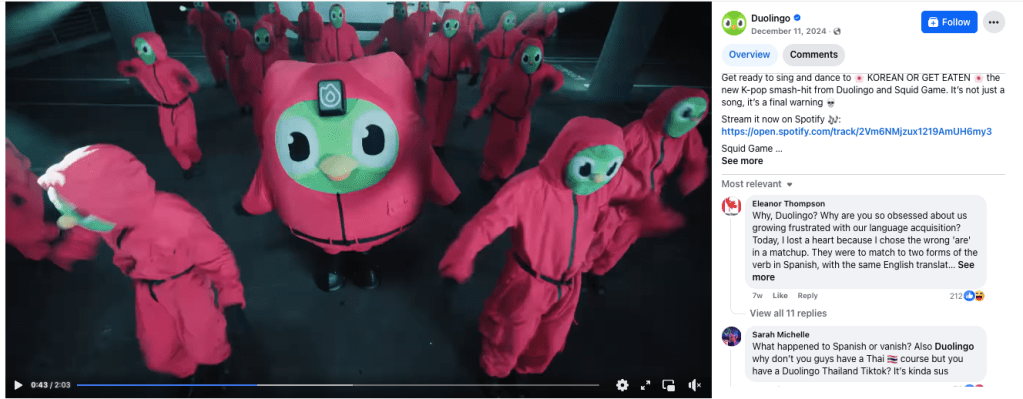
When comparing reactions, Duolingo gets far more “Hahas” than Babbel. This could be a key piece in bridging the gap between metrics disparities.
A Possible Solution
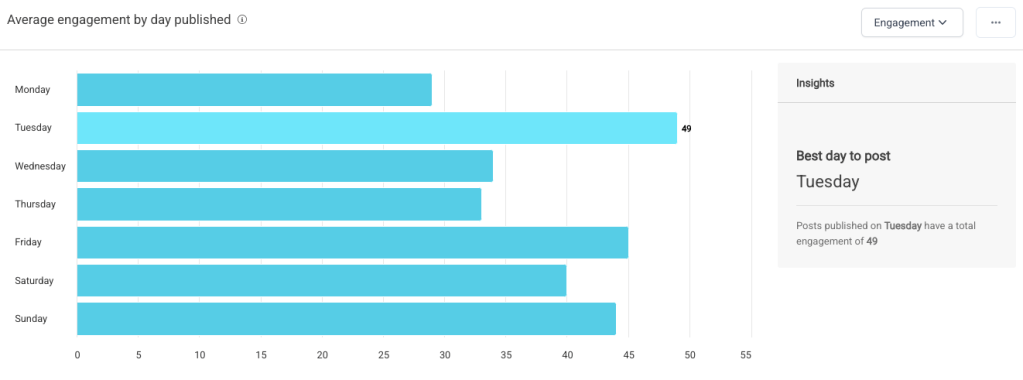
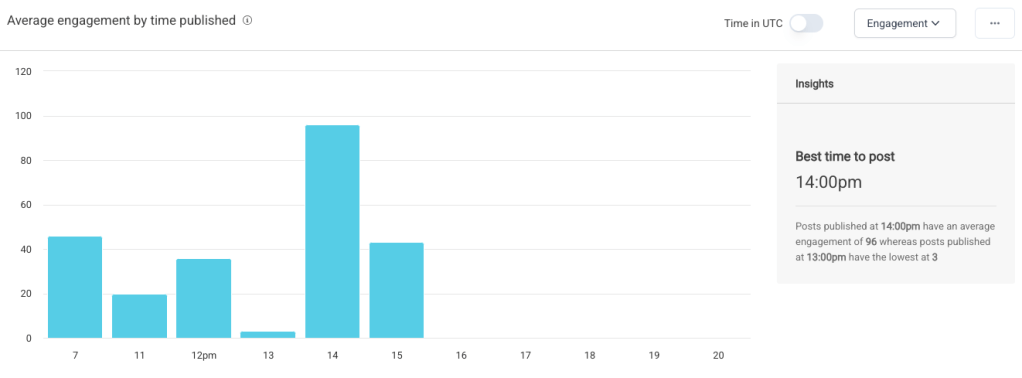
To better compete with Duolingo’s social media presence, Babbel can incorporate a few key changes to their strategy. First, they can set out to post every Tuesday afternoon. According to BuzzSumo, this is when their engagement is the highest.
Secondly, Babbel could incorporate more video based content in their feed. Duolingo mainly posts video, which successfully draws viewers in through motion and audio. Babbel can easily turn their educational infographics into a video format. In Paid Attention by Faris Yakob, he states that both novelty and familiarity can capture attention. By using their standard branding in a fresh video form, this can gain the viewers’ attention.
Along with video formatting, Babbel can set out to participate in more trends. Having a mascot of sorts would make this easier, but caution should be taken in that realm in order to not blatantly copy Duolingo. Because of their follower loyalty, any action taken to compete with them too closely could cause Babbel to reap preventable backlash.
Instead, Babbel can lean on storytelling and user-generated content (UGC) for trends to expand their community and build trust amongst users; this is something Duolingo does not do. Lastly, Babbel should lean into humor. As seen by their elephant post, viewers may feel more comfortable to interact when there’s a laid back tone established by the post.


Leave a Reply