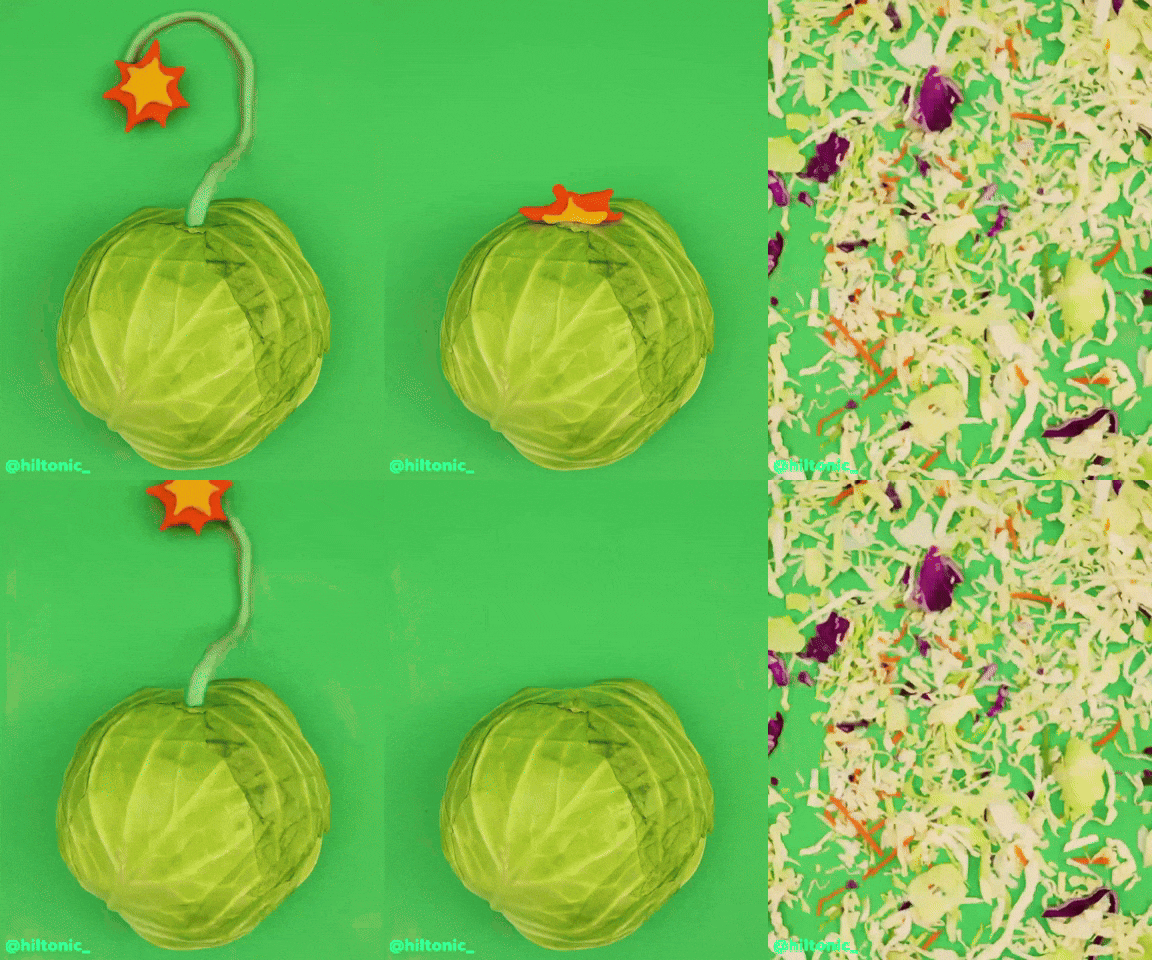
This week, I have learned what kind of work it takes to produce stop-motion animation. Despite seeing countless movies and videos using the technique, I never fully appreciated the work it takes until now. Yeah, I know it’s a bunch of pictures put together to move fast… but the amount of patience it takes is truly remarkable. Before I show you what I’ve created so far, a summary of the latest chapters I’ve read from Animated Storytelling by Liz Blazer helps inform some of my decisions.
This Week’s Reading
Chapter 5 / Color Sense: Enhance Your Story with the Right Palette
Color Vocabulary:
- Hue – “What color is that?” (Red, blue, green, etc.)
- Saturation – The intensity/purity of a color, vibrant vs. dull
- Value – The relative lightness or darkness of a color; high value = closer to white, low value = closer to black.
- Tone – Reflects the overall brightness or darkness of a scene
Color Scripts: Sequential visual outlines of how you intend to use color in your work.
- If your story had to be only one color, what would it be?
- Pre-Color Script (PCS) – A series of rectangular color bars that match/represent your story’s beats.
- “Choosing the right hue, saturation, and/or value for the key story moments will help amplify the emotion you’re going for and will clarify intent.” (Blazer, pg. 101)
Color Simplified:
- Design for movement – Make sure the colors of your backgrounds/still objects do not compete with the colors of your moving objects.
- Limit your palette – When choosing color, less is more. Too many colors will confuse the viewer and cause the focal point to get lost.
- Use saturation mindfully – It can steal the spotlight if used in the wrong place. Saturate what’s important and desaturate supporting elements.
- Support, don’t upstage, your subject – Leave white space around the subject or use high contrast colors to compliment the focal points.
- Use surprise color for punctuation – Use a color much different from any in your palette to spark intrigue.
- Make your own rules – Above are all suggestions, but there are no true rules. Experiment with color, but be sure to stay consistent throughout your project.
Chapter 6 / Weird Science: Experiment with Animation
“I call my process Weird Science. It’s a mixture of creative rituals and experimentation.”
– Rama Allen
- Free yourself to make bad art. When the opinions from yourself and others disappear, you can be your most creative.
- Work on the edge of your skill set. Be slightly uncomfortable and willing to push your limits; this is where you grow.
- Make the work you want to be hired to do.
- Keep working on your personal projects. These help you develop professionally and could lead to great things.
- Make a project experimentation list. With a current project or a list for the future, write down techniques you want to try.
- Experiment with transitions. This is a crucial component of motion design and has power to become the story.
- Experiment with movement. From smooth, quirky, or edgy, movement conveys the tone of your project. Make movement studies to find what look you’re going for.
Some Research
Before diving into my own stop-motion piece, I clicked around on YouTube and found several interesting videos to gain inspiration from.
Because I simply searched “stop motion animation,” those with the most views came up first. This gave me an idea of what is popular within the community and allowed me to get a better feel for the scene. This first animation, The Deep, has several interesting aspects. The metallic tools being manipulated in such a way to create smooth movement is an interesting juxtaposition. The suspenseful underwater sounds mixed with metal clanking enhances the dark, mechanical feel of the piece.
While the first video has a mysterious tone, this one is playful and light. The soft texture of the felt and use of brighter color emphasizes this feeling. The realistic sounds of a working kitchen help support the visuals and create balance in the piece.
This video is inspiring because it shows that fancy materials/equipment is not needed to create a successful animation. Despite most characters being made of foil, the artist did a great job in expressing their personalities through choice of movement.
I find clay stop motion so fascinating and want to give it a try myself, so this video gives me a better idea of what using that medium can look like. I love how the sound effects switch between metallic “clinks” and gooey squishes; despite all being clay, the sound paired with it directly affects how it is perceived.
This one blew me away. The gentle softness and smooth transitions captured despite the wood being solid and difficult to hold steady is beyond me. Again, the sound effects fully transform the tone of this piece by using gentle thuds and sweeps instead of hammering and sawing.
The animation and behind the scenes of Sub Sandwich show the full process and final product of professional stop motion. Multiple days of shooting were needed to produce a 2 minute video. The ingenuity of materials makes this project intriguing and the smoothness of the motion suggests countless hours of work.
My Turn!
After gathering some inspiration, I set out to create two briefs to choose from for creating my own stop-motion piece. Both ideas involve Play-doh as the main medium because it acts as clay but is a bit more forgiving. Using what I learned in last week’s chapters of Animated Storytelling, I developed one linear and one non-linear story structure. I kept both pretty simple since the creative department only consists of one person (me).
I think I’m leaning toward the non-linear idea because I can keep the setting more contained. The linear story would take place in my kitchen, living room, and office, while the non-linear idea can stay in my kitchen. I think this will be better for consistency across the animation. Which do you think I should go for?
Before jumping straight into one of the ideas above, I put together a quick stop motion in the spirit of Valentine’s Day to get a feel for things. This was fun to do, but taking the pictures took longer than anticipated. I now have an idea of the time commitment I have coming up next week!
 Rebecca Branton
Leave a comment